Beyond rules and awareness — into reasoning

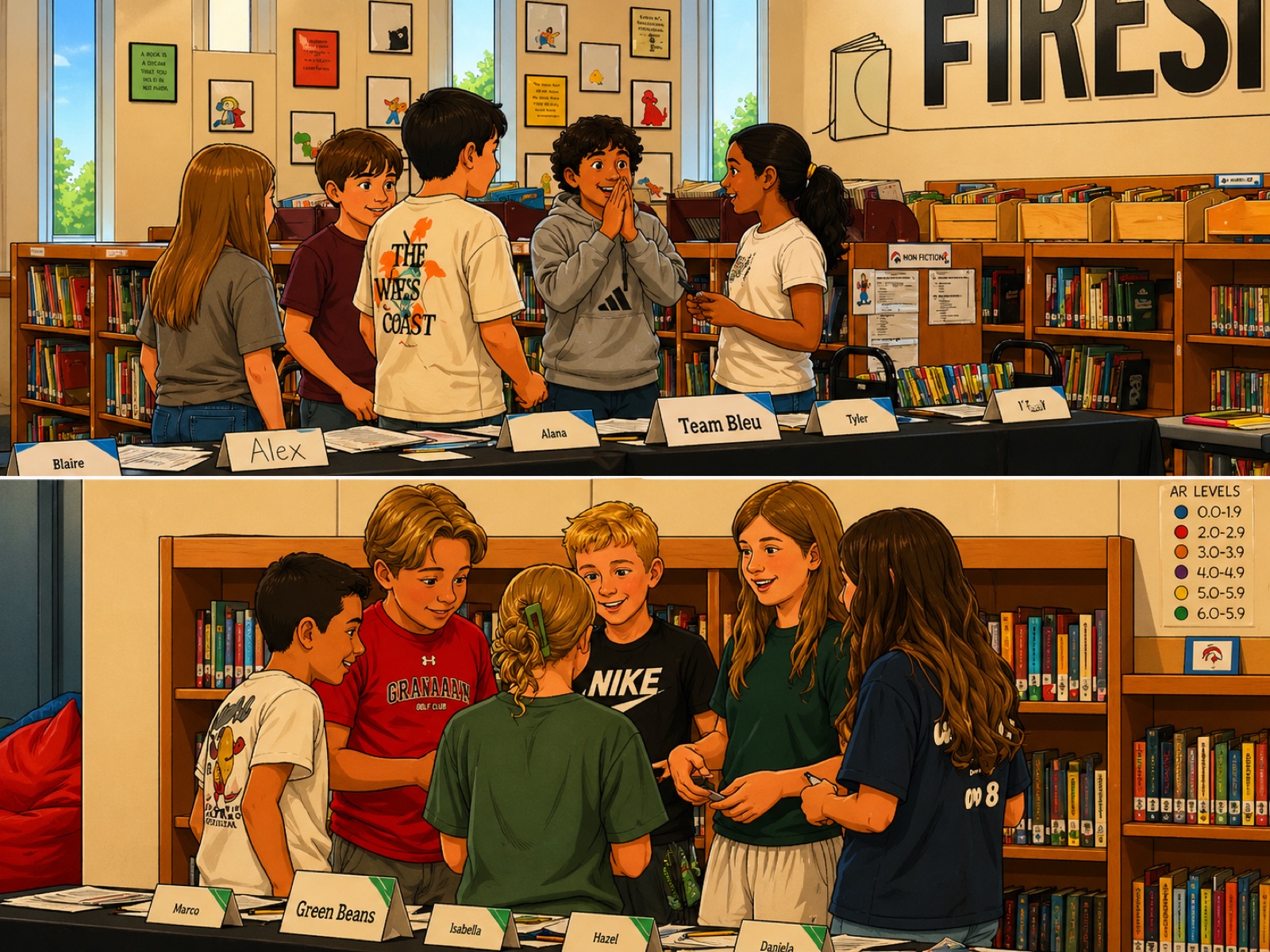
The Ethical Tech Lab gives students the tools to navigate complex technology choices before habits — and dependencies — are deeply formed. Modeled after the nationally recognized Ethics Bowl format and adapted for upper elementary and middle school, it picks up where Digital Citizenship leaves off — moving from awareness into structured ethical reasoning and student-led discussion.
"There are no wrong answers. The goal is thinking, not agreement. You don't need to wrap it up neatly. Leaving with questions is a sign of a great discussion."
From the Facilitation Guide
No training required
You don't need background knowledge. Just follow the script — the prompts do the heavy lifting. You're not the expert. You're the guide.
Entering Year 2
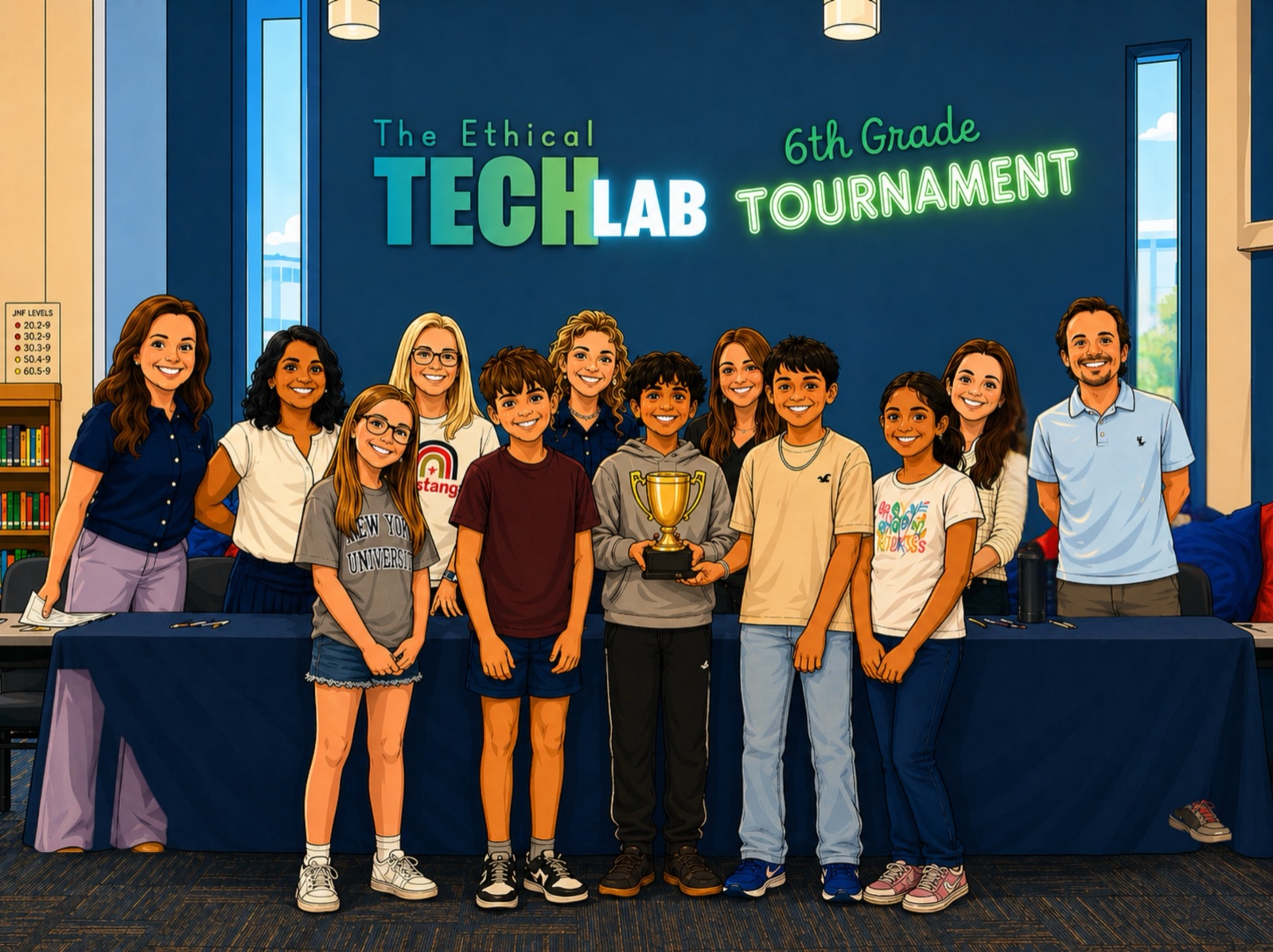
After a successful 2025–2026 pilot — including the program's first Ethical Tech Tournament — now accepting 5–10 schools for 2026–2027. The pilot is free.
Grades 4–8
Upper elementary and middle school
10+ sessions
~1 hour each, 1–2 year program
Turnkey curriculum
Everything on a single page per session

How it works, what's inside, and why the format matters

Click any card to expand.

Built on a Proven Model
Why the Ethics Bowl format works

The National High School Ethics Bowl has been developing students' ethical reasoning skills for over two decades. Unlike traditional debate, the Ethics Bowl rewards thoughtful analysis, intellectual humility, and the willingness to change your mind when presented with a better argument.

99%
report stronger critical thinking
95%
better at engaging differing viewpoints
92%
stronger collaboration and teamwork
82%
increased interest in ethics

Source: National High School Ethics Bowl participant surveys (nhseb.org)

The Ethical Tech Lab adapts this proven format for younger learners. We took the methodology that works at the high school and collegiate level and redesigned it for upper elementary and middle school students facing a challenge no previous generation has had: growing up with AI, algorithms, and social media shaping their daily decisions.
Students walk away with the ability to think critically, the confidence to speak respectfully, and their own beliefs about technology — shaped by reasoning, not handed down as rules.
The Dilemmas
Real issues. No easy answers.

Every dilemma is panel-written, fact-checked, and drawn from situations students actually face — not hypotheticals from a textbook.

2026 Tournament Cases
The Snapchat Streak Dilemma
Jayla's grandmother's 75th birthday is at a cabin with no WiFi — and she'll lose all her Snapchat streaks. Her best friend says losing the streak means she doesn't care about their friendship. Her mom says Snapchat manipulates kids like casinos. Who's right?
The Viral Hoax
Theo uses AI to make a fake video of the principal announcing school starts at 10 AM — with goofy music and flying pizza emojis to make it obviously fake. Someone shares it without the silly edits. It goes viral. Is Theo's suspension fair?
The Group Project Disaster
Mia was supposed to do the research but spent the week at soccer. The night before it's due, the group panics and uses AI despite their academic integrity contract. The teacher catches fake data. Zeros for everyone. Is that fair?
2026–2027 Session Topics
The Roblox Friend
Privacy and safety
The Takis & Monster Warning
Media literacy
The Gaming Spiral
Screen time and balance
The Campaign Cleanup
Digital footprint and identity
The Group Chat Freeze-Out
Online relationships
The Science Fair Win
AI literacy
The Funny Video
Cyberbullying
What Pilot Schools Receive
Everything you need. Nothing you don't.

Every session is built around a panel-written ethical dilemma drawn from the technology issues your students are already navigating — AI, social media, gaming, privacy, screen time, and digital identity.

Inside each session
1
Ethical Dilemma
A real-world scenario written by a panel of educators and technology experts
2
Fact Sheet
Background research for evidence-based reasoning, not opinions
3
Facilitation Guide
Step-by-step session plan with discussion prompts and timing
4
Student Worksheets
Note-taking, team discussion templates, and reflection sheets
Standards Alignment
AZ EdTech StandardsDigital Citizen · Knowledge Constructor
ISTE StandardsDigital Citizenship
ELA StandardsResearch · Evidence Evaluation · Source Credibility
Science & Social StudiesArgumentation · Structured Inquiry

What families are saying about the Ethical Tech Lab

Feedback from parents from the inaugural 2025–2026 Ethical Tech Lab pilot and Tournament.

"I really appreciate the debate-style format of the Ethical Tech Lab. It encourages my child to listen to different perspectives, think critically, and clearly explain their own ideas about technology and ethics. This has helped my child become more mindful and thoughtful about their online behavior and decisions."

Tiffani
Parent · 2025–2026 pilot

"I am blown away by the impact the Ethical Tech Bowl. It's an incredibly unique experience for our kids. The peer debate, discussion, and review are a format that really resonates with kids. It ensures the lessons stick with our kids. It's also interesting for parents to hear their kids (and kids' friends) discuss these topics. What an eye-opening event!"

Kelli
Parent · 2025–2026 pilot

"What a unique and impactful experience! The Ethical Tech Lab is a once in a lifetime event that challenges students to examine complex technological dilemmas. In doing so, it sharpens their critical thinking, strengthens their ability to engage in meaningful debate with their peers, teaches them to actively work as a team, and builds confidence and self-esteem. It was incredible to watch the students engage and empower their classmates!"

Rachel
Parent · 2025–2026 pilot
Culminating Experience

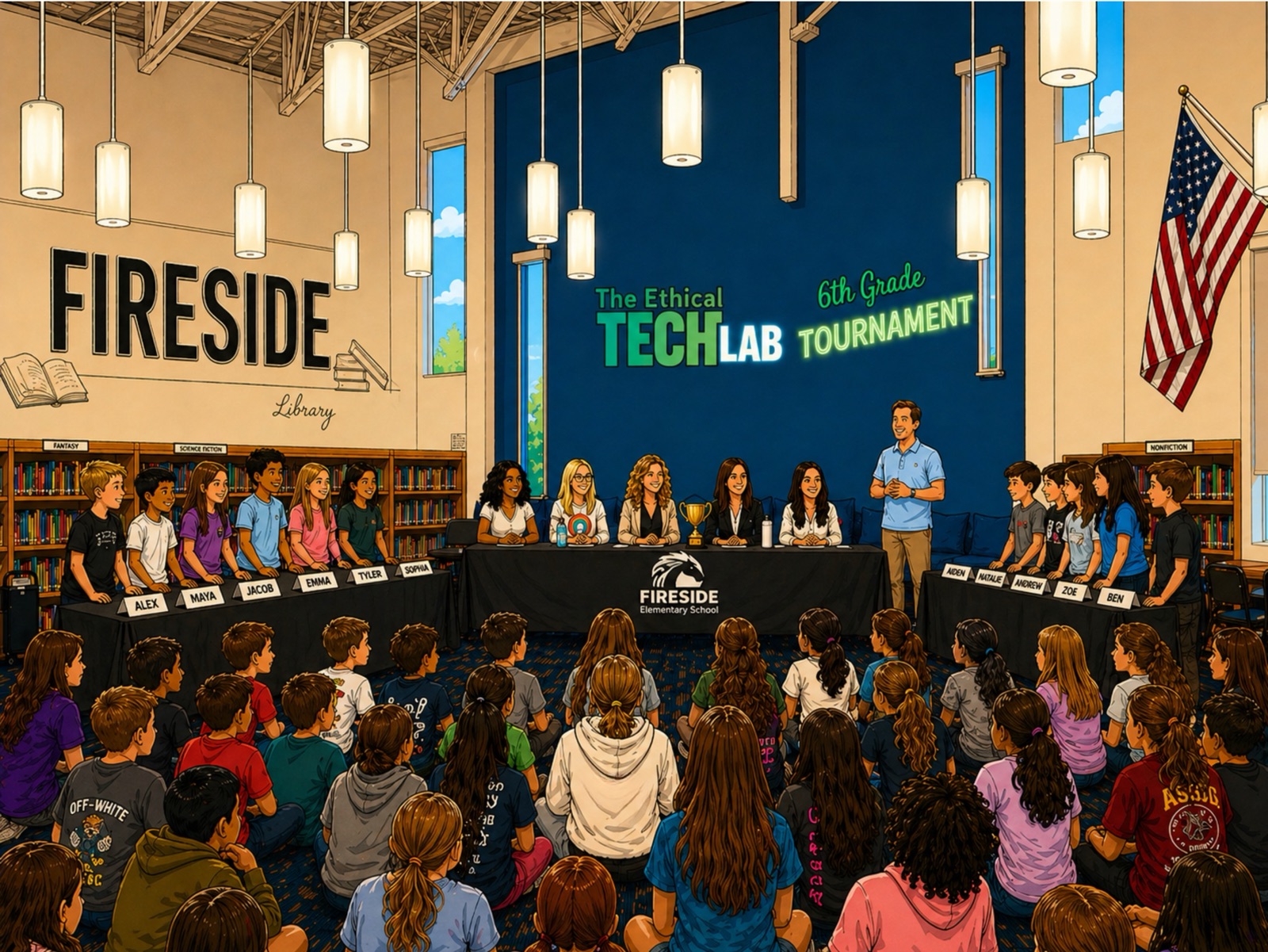
The Ethical Tech Tournament

Students apply their learning in a structured, team-based format inspired by the Ethics Bowl model. Success is not based on "winning an argument" — but on demonstrating thoughtful reasoning, openness to new ideas, and the ability to engage in civil discourse.

01
Prepare
Teams research their assigned dilemma, gather evidence, and build their analysis together
02
Present
Teams present their analysis of an ethical dilemma to judges and peers
03
Respond
Teams offer constructive commentary on another team's response
04
Dialogue
Teams respond to judge questions, refining and articulating thinking in real time
05
Reflect
Teams debrief on what they learned, what surprised them, and how their thinking shifted
06
Celebrate
The tournament serves as a community event showcasing student voice and growth
Bring the Ethical Tech Lab to Your School

Ready to give students space
to think it through?

The 2026–2027 pilot is free. We're looking for 5–10 schools to run the program and help us refine it. Share your info below and we'll reach out directly.

Program Design
Designed and piloted by Prompt-Ed · First tournament completed Spring 2026.